
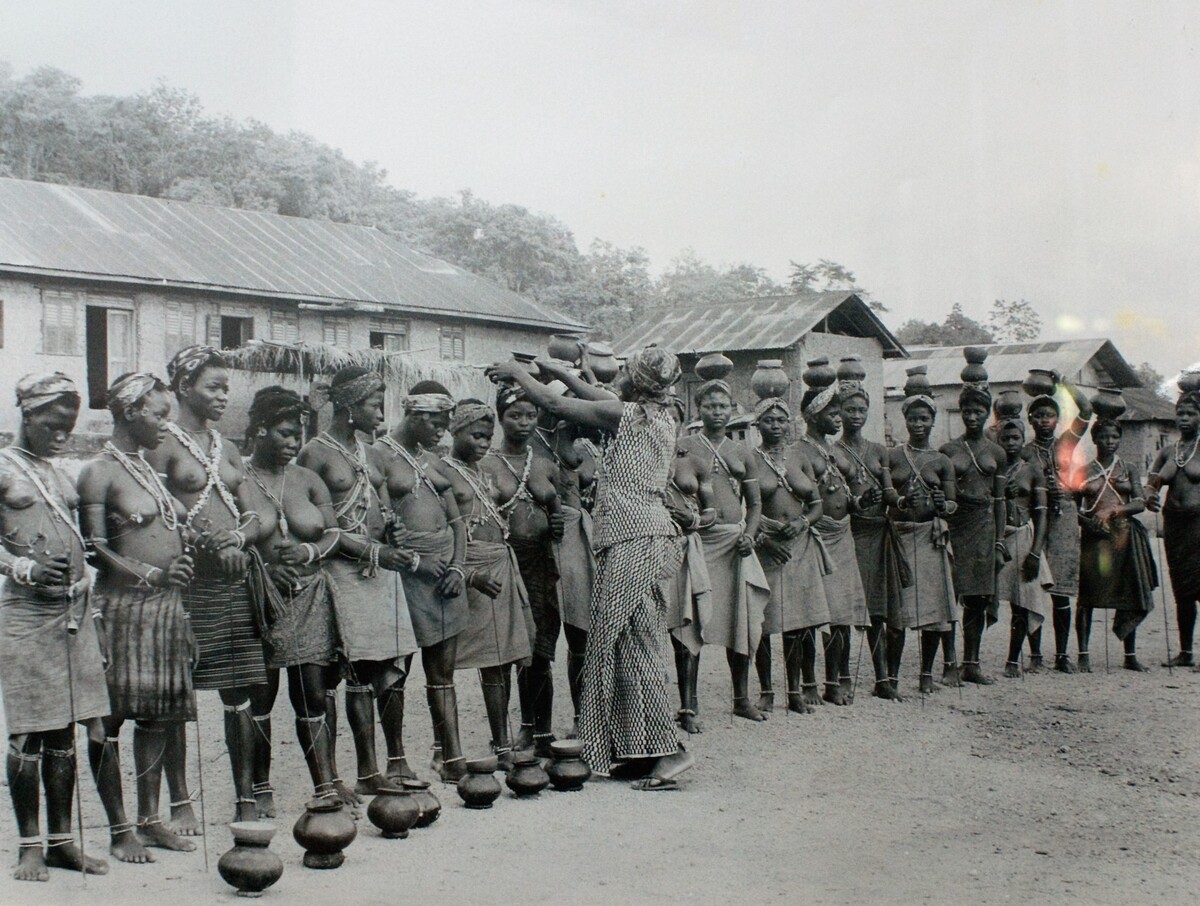
Dipo Rites of the Krobo People of Ghana | Traditional Krobo Puberty Ceremony (c) National Museum of Ghana
Every year, in the spring, communities in Ghana’s Eastern Region come alive with an important Krobo tradition known as Dipo. For generations, Dipo has marked an important stage in the lives of young Krobo girls as they move from childhood towards womanhood.
The tradition is especially associated with the Krobo people of the Eastern Region, including communities around Odumase Krobo and Somanya. Dipo is more than a ceremony. It is a period of teaching, ritual, music, dance and community celebration that connects young people with their cultural heritage.
Dipo is traditionally a puberty rite and rite of passage. In the past, it was closely connected with preparation for marriage. Young girls who completed the rites were regarded as having entered a new stage of life and were taught about the responsibilities expected of adult women.
Historical accounts describe Dipo as a way of preparing girls for adult responsibilities, including personal care, household management, family life and traditional values.
The ceremony therefore served both a spiritual and an educational purpose.
Today, the meaning and practice of Dipo have changed in some communities. While its traditional symbolism remains important, modern education, Christianity, changing ideas about marriage and other social changes have influenced how the ceremony is understood and performed.
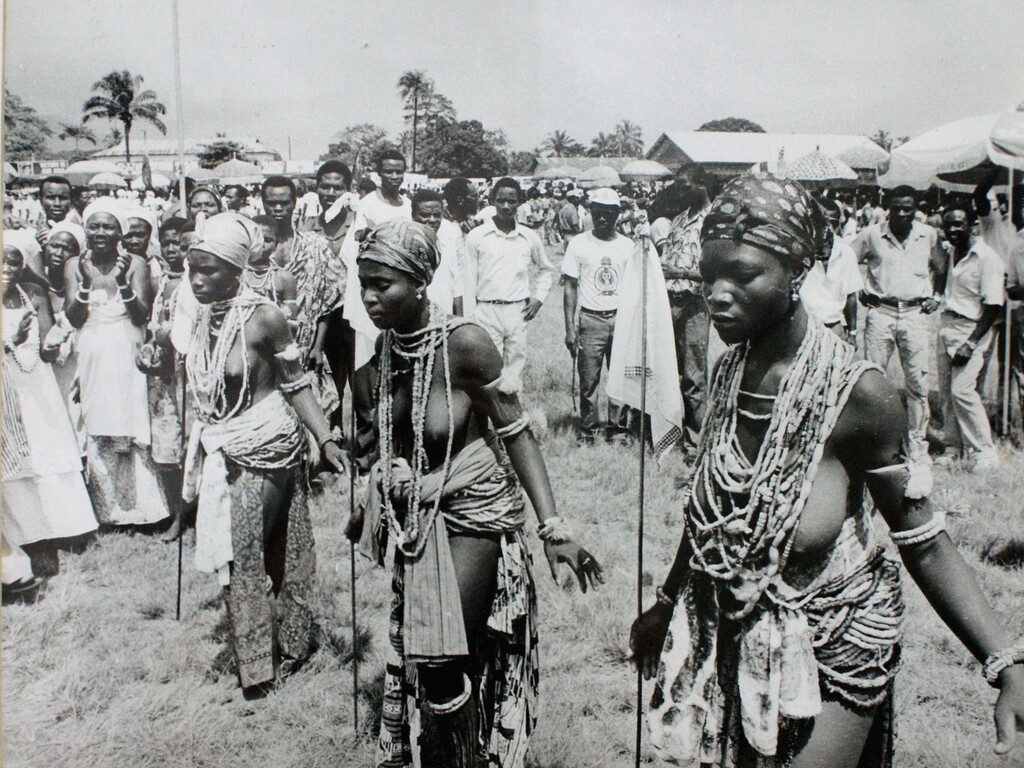
Historically, completing Dipo was strongly connected with marriage. Girls who underwent the ceremony were considered prepared for the responsibilities of married life, and customary marriage could follow. (c) National Museum of Ghana
The girls taking part in the ceremony are commonly known as Dipo-yo, meaning Dipo girls or initiates.
The ceremony traditionally involves several stages. These can include ritual preparation and cleansing, instruction by older women, traditional songs and dances, and finally a public celebration in which the girls appear in traditional clothing and jewellery.
The exact form and length of the ceremony can vary between communities and over time. Historical and contemporary accounts describe ceremonies lasting from several days to longer periods of instruction.
One of the most visible features of Dipo is the use of beads. Krobo people are internationally known for their distinctive glass bead-making traditions, and beads have a special place in Dipo.
Beads are much more than decoration during Dipo.
The girls are traditionally adorned with strings of beads around the waist, neck, arms, legs and other parts of the body. Their colourful appearance makes the final celebration one of the most striking expressions of Krobo culture.
For the Krobo, beads can communicate identity, age, status and important stages in a person's life. During Dipo, they help express the transformation from girlhood to womanhood.
The close relationship between Dipo and beadwork is also significant because bead-making is an important part of Krobo cultural heritage and local economic life. Research on Krobo culture describes beads as an integral part of the Dipo ceremony.
An important part of Dipo is the relationship between the girls and older women in the community.
During the period of instruction, experienced women traditionally pass knowledge to the younger generation. The girls learn about behaviour, personal hygiene, family responsibilities, traditional customs and other aspects of adult life.
This makes Dipo an important example of oral cultural transmission. Knowledge is not simply written down; it is passed from one generation to another through teaching, observation, music, dance, stories and participation.
In this way, the ceremony helps preserve aspects of Krobo culture that might otherwise be difficult to transmit to younger generations.
Music is another important part of Dipo.
Traditional songs accompany different stages of the ceremony, while dancing provides an opportunity for the initiates to demonstrate what they have learned. The Klama dance is particularly associated with the celebration and public presentation of the girls.
The final celebrations bring together families, elders and members of the wider community. Singing, drumming, dancing and colourful clothing turn the completion of the rites into a public celebration of the girls and their cultural identity.
One of the best-known elements of traditional Dipo is the use of a sacred stone.
Historical descriptions explain that the stone was associated with an important stage of the initiation. The practice has carried different meanings and interpretations, including ideas about purity, maturity and readiness for adult life.
The sacred stone also connects modern Dipo with the historical landscape of the Krobo people. Accounts of the tradition describe the original ceremony as being associated with the Krobo Mountains before communities later settled on the plains.
Some details of the traditional rites are private or sacred and are not intended for public display. For this reason, descriptions of Dipo should distinguish between what can appropriately be shared with visitors and what remains part of the community's protected cultural knowledge.
Historically, completing Dipo was strongly connected with marriage. Girls who underwent the ceremony were considered prepared for the responsibilities of married life, and customary marriage could follow.
The National Commission on Culture describes Dipo as a puberty rite through which adolescent girls are initiated into womanhood.
However, it is important to understand Dipo in its historical and contemporary contexts. Modern Krobo communities live in a very different social environment from that of previous generations. Girls and young women now attend formal schools, pursue careers and participate in many different forms of education and community life.
As a result, Dipo can be understood today not simply as preparation for marriage, but also as an expression of Krobo identity, heritage, community and continuity.
Like many traditional practices, Dipo has changed over time.
Some aspects of the older ceremony have been modified, while other elements remain important. Modern social values, formal education, religion and migration have all influenced the way traditional practices are maintained. Academic research has also documented debates and criticism surrounding aspects of Dipo and the way the ceremony affects young participants.
These changes do not necessarily mean that the tradition has disappeared. Instead, they show that cultural heritage can be a living process. Communities may preserve important symbols and values while adapting the way traditions are practised.
Dipo provides a window into the rich cultural history of the Krobo people.
Through ritual, beads, music, dance, traditional knowledge and community participation, the ceremony brings together many different parts of Krobo cultural life. It also demonstrates the important role of women as transmitters of knowledge from one generation to the next.
For a museum visitor, Dipo is therefore not simply a story about an ancient ceremony. It is a story about identity, family, womanhood, education, craftsmanship and cultural continuity.
Every year, as young Krobo girls take part in Dipo, an old tradition is given new life. The ceremony reminds us that heritage is not only found in historic buildings and museum objects. It can also live in the people, knowledge, skills, songs, beads and ceremonies that communities continue to value and pass on to future generations.
Ghana 3D Tours